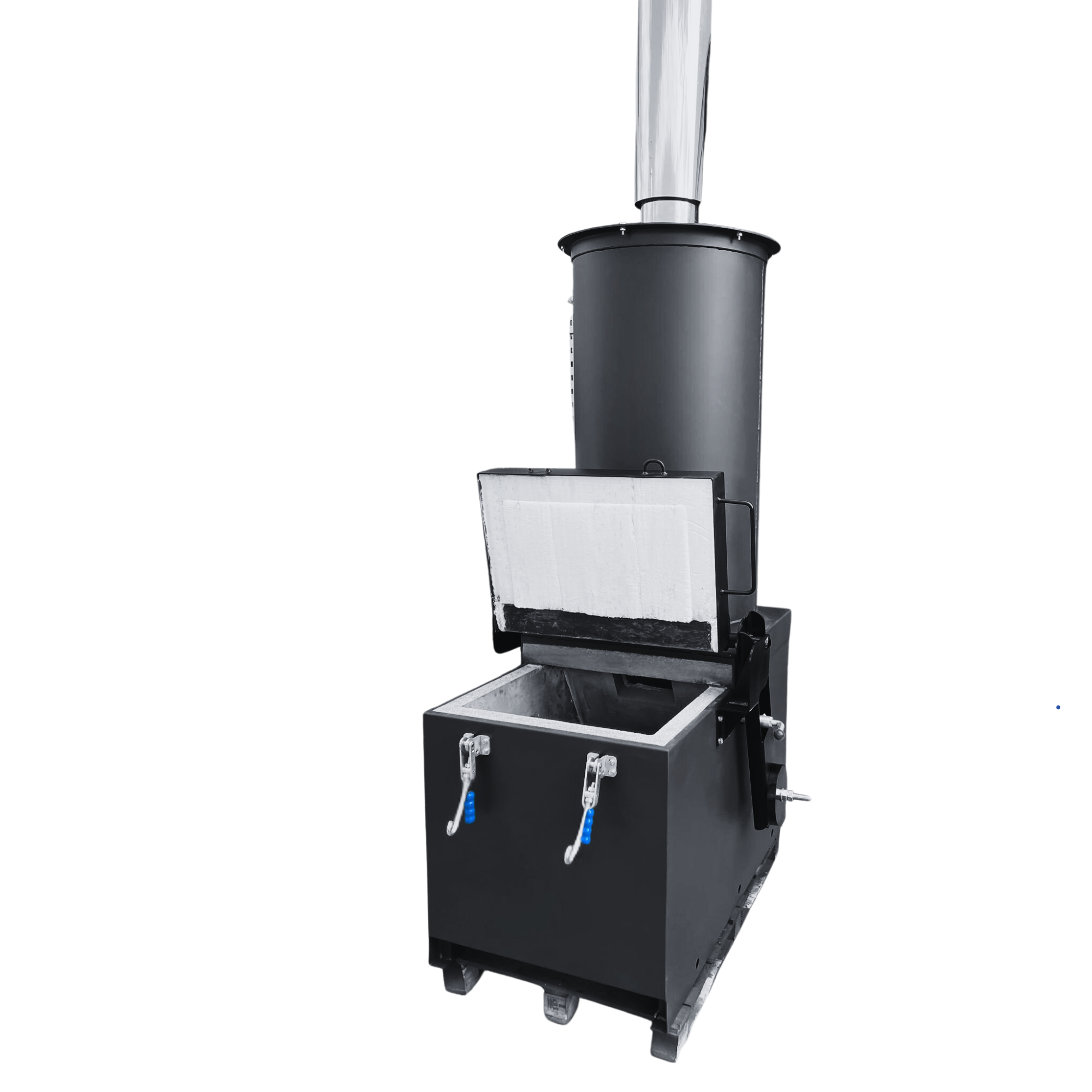
AIS animal incinerators are heavy-duty, hand-built thermal disposal units engineered for the realities of daily on-site operation. Every AIS Cyclone includes an integral secondary chamber and is supplied with technical documentation to support local approval in UK, US and international markets.
Whether you operate a single broiler shed, a high-throughput pig unit or a 5,000-head dairy, our incinerator range delivers bio-secure carcass disposal with predictable fuel burn, low maintenance and a working life measured in decades — not seasons.
Engineered for controlled on-site incineration
On-site incineration provides a fast, bio-secure route for handling fallen stock and farm mortalities. Every AIS Cyclone incorporates an integral secondary chamber designed to maintain at least 850°C for a minimum two-second residence time.
Our control panels are PLC-driven, fully audit-logged, and supplied with the technical and operating documentation farms and processors need for local inspections.
- ABP Category 1 & 2 capable
- 850°C / 2-second secondary residence
- Twin-burner, temperature-controlled combustion
- PLC controls with USB data logging
- Monolithic refractory lining
- Loadable during operation (mid/large frames)
Choose by species and daily volume
Poultry & small livestock
AIS 09, 025 and 026 Cyclones suit broiler farms, layer units and lamb operations with daily mortality up to ~250 kg. Top-loading lids and rapid cycle times keep disposal in step with daily routines.
Swine units
AIS 040, 041 and 055 Cyclones are designed for the continuous duty of a busy pig unit. Loadable-while-running operation means routine and emergency disposal stays bio-secure without disrupting the day.
Cattle & dairy
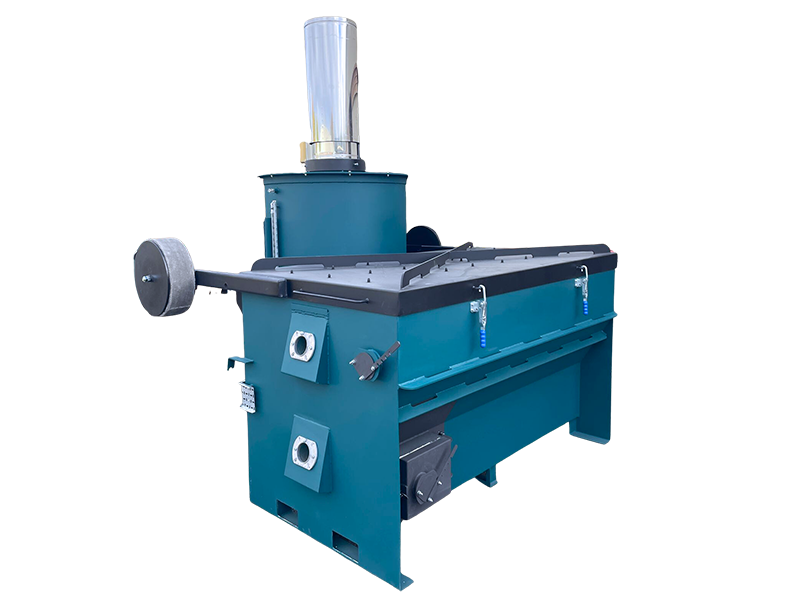
AIS 0132, 1250, 1870 and 2650 Cyclones handle full adult cattle. Reinforced load chambers, heavy refractory and industrial PLCs are engineered for high-volume sites and disease-control response.
Industrial & disease control
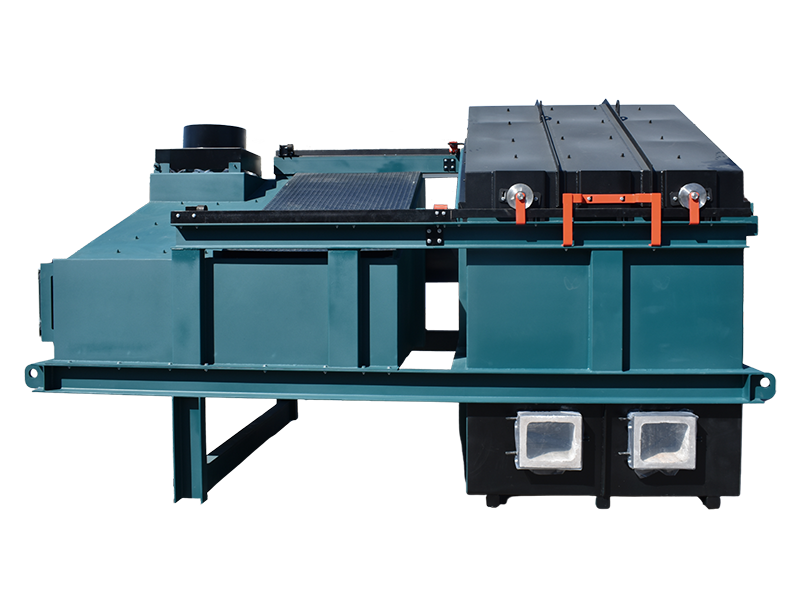
The flagship AIS 3860 Cyclone delivers up to 950 kg/hr — sized for agribusiness, government veterinary contracts and rapid emergency response to notifiable disease outbreaks.
Built to last — engineered to outlast
Every AIS Cyclone is hand-fabricated in our UK and US workshops from heavy-gauge steel, then lined with a monolithic refractory cast that resists thermal shock for far longer than brick-built alternatives. The result is an incinerator that runs daily for 15–25 years with routine servicing.
All models ship with a 3-year warranty, accessible service points and globally-stocked spares — including burners, thermocouples and refractory components.
Recommended AIS Cyclone models
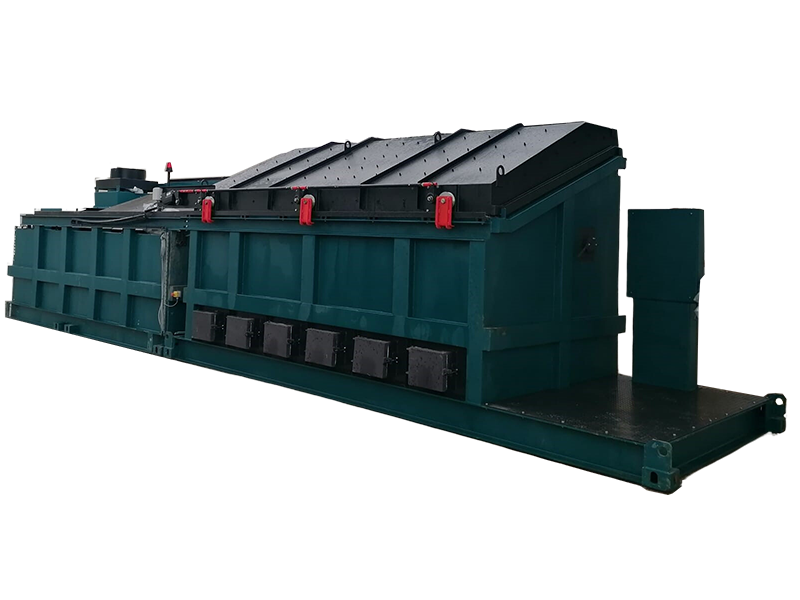
Related pages
- Animal incinerators
- Farm & agricultural incinerators
- Poultry & chicken incinerators
- Pig & swine incinerators
- Horse & equine incinerators
- Commercial incinerators
- Carcass incinerators
- Automatic loading incinerators
- Sheep & lamb incinerators
- Abattoir & slaughterhouse incinerators
- Goat incinerators
- Pet incinerators
- Incinerator servicing
- DEFRA servicing
- Spares & repairs
- Thermocouple replacement
- Spare parts catalog
- All AIS Cyclone models
- Compare incinerators
Which AIS Cyclone models suit cattle
A cattle incinerator should be shortlisted against the heaviest carcass on the dairy or beef holding and the way it will reach the chamber. The models below already name cattle in their existing descriptions. Review each opening, load height and capacity together, rather than treating a young calf and an adult animal as interchangeable disposal loads.
For a cow incinerator, discuss calving losses and occasional adult mortality separately when explaining demand to AIS. The loading route, operator access and available fuel all affect the purchase decision. Keep handling requirements specific to the cattle on your holding; neither a general catalogue range nor an approximate hourly rate establishes a complete cycle time for every carcass.
| Model | Load capacity (lb / kg) | Burn rate (approx.) | Fuel |
|---|---|---|---|
| AIS 0132 Cyclone | 2,602 lb / 1,180 kg | Up to 110 (UK) / 232 (ROW) lbs/hr / Up to 50 (UK) / 105 (ROW) kg/hr | Diesel / LPG / Natural Gas |
| AIS 1250 Cyclone | 2,844 lb / 1,290 kg | Up to 661 lbs/hr / Up to 300 kg/hr | Diesel / LPG / Natural Gas |
| AIS 1870 Cyclone | 4,190 lb / 1,900 kg | Up to 1102 lbs/hr / Up to 500 kg/hr | Diesel / LPG / Natural Gas |
| AIS 2650 Cyclone | 5,711 lb / 2,590 kg | Up to 1543 lbs/hr / Up to 700 kg/hr | Diesel / LPG / Natural Gas |
For cattle, a stated load weight is only part of selection; the table retains model-specific burn-rate qualifiers alongside the chamber capacity.
How to choose a cattle incinerator
- Herd and carcass size — Use the largest animal as a loading check alongside the regular calf-disposal requirement.
- Daily and calving demand — Explain ordinary mortality and seasonal losses before choosing a duty schedule for the dairy or beef unit.
- Cattle-yard fuel supply — Review diesel, LPG and gas consumption estimates with the supplier who serves your holding.
- Adult-animal loading — Examine larger-frame dimensions and the dedicated hydraulic-loading guidance before deciding on site placement.
- Capital and upkeep — Budget for the quoted equipment and the service arrangement needed to keep the holding’s disposal route available.
Rules and permits
USA
For American dairy and beef farms, on-farm incineration falls within state environmental and agriculture regulation under federal EPA and USDA frameworks. Requirements vary across states; buyers should check with their state agency before installing and explain whether calf losses, adult cattle or both are intended.
UK
A UK cattle holding should use the existing DEFRA/APHA approval guidance to review fallen-stock disposal and site requirements. Agricultural Cyclones are described as DEFRA type-approved on this site, while the intended cattle material and the particular installation still require confirmation with the responsible authority.
DEFRA and APHA approval guidanceWhy AIS
Dairy and beef buyers can verify AIS manufacture in the UK and USA and the existing descriptions of secondary chambers, PLC controls and monolithic refractory. The stated warranty ends at three years or 2,100 hours, whichever is sooner, subject to its terms and excluded consumables. Visit About and the real case-study accounts when assessing company experience and aftercare.
Frequently asked questions
What combustion standard do AIS animal incinerators meet?+
Every AIS Cyclone incorporates an integral secondary chamber designed to maintain at least 850°C for a minimum two-second residence time. AIS supplies documentation to support approval against the applicable local regulations in each destination market.
What animals can be incinerated?+
AIS incinerators handle poultry, swine, cattle, sheep, equine and mixed agricultural waste. Capacities range from 110 kg to 3,750 kg per load.
How long does on-farm cremation take?+
Typical cycle times range from 4 hours for small flocks to 12 hours for large cattle loads, depending on model and feedstock moisture.
What fuel do animal incinerators use?+
AIS Cyclone models run on diesel, LPG, or natural gas. Heat-exchange options reduce running costs further.
What is the price of a cattle incinerator?+
Prices depend on the model, fuel type, loading system and installation. Request a quote with your herd size and typical daily mortality and we'll recommend the right model and price it for you.
Which models are listed for adult cattle?+
AIS 0132, 1250, 1870 and 2650 have existing cattle uses. Compare their load capacities and full dimensions with the expected animal, and ask AIS to review the loading method before purchase.
How much fuel will calf and cow disposal use?+
Running costs depend on fuel type, local fuel prices and how often you burn. Every AIS Cyclone has a secondary chamber and is built for fuel efficiency; we can estimate costs for your site when you request a quote.
Are gas-fired options listed for cattle models?+
The cattle-use machines compared here list LPG and natural gas alongside diesel. Confirm which burner package will be supplied for the fuel connection available on your holding.
Do dairy holdings need approval before installation?+
USA dairy operators should check with their state environmental and agriculture agencies; UK buyers should consult the DEFRA/APHA guidance. Confirm intended cattle material and location rather than assuming equipment type approval covers the whole site.
When will an ordered cattle unit arrive?+
Lead times depend on the model and your location. Contact us for current availability to the USA, UK and other markets.
 Contact Us