When daily volume runs into the tonnes, the engineering changes. Commercial Cyclones sit on heavy-frame chassis, run reinforced refractory and pair industrial burner packages with PLC controls built for continuous-duty operation.
Industrial-class capabilities
- Continuous-duty refractory & burners
- Industrial PLC controls with full audit logging
- Burn rates up to 950 kg/hr
- Loadable during operation
- Optional heat-recovery integration
- Disease-control and inspection-ready documentation
Size throughput around the actual working shift
Commercial sites need to distinguish loading capacity from sustained throughput. A chamber's kilogram capacity describes a load; its burn rate supports a processing estimate. Daily volume divided by operating hours is a useful starting point, but loading, start-up, ash removal and planned maintenance also take time. Moisture content and the waste mix affect the result.
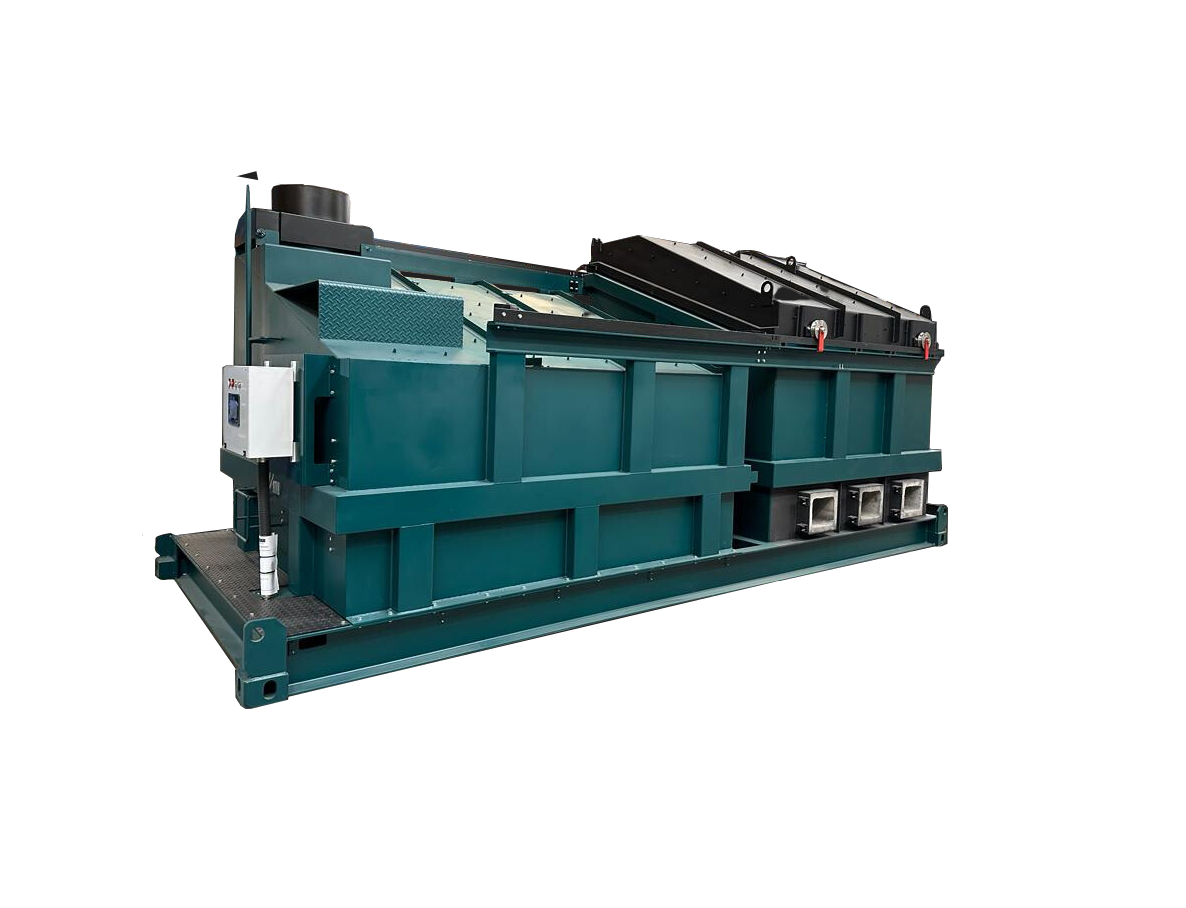
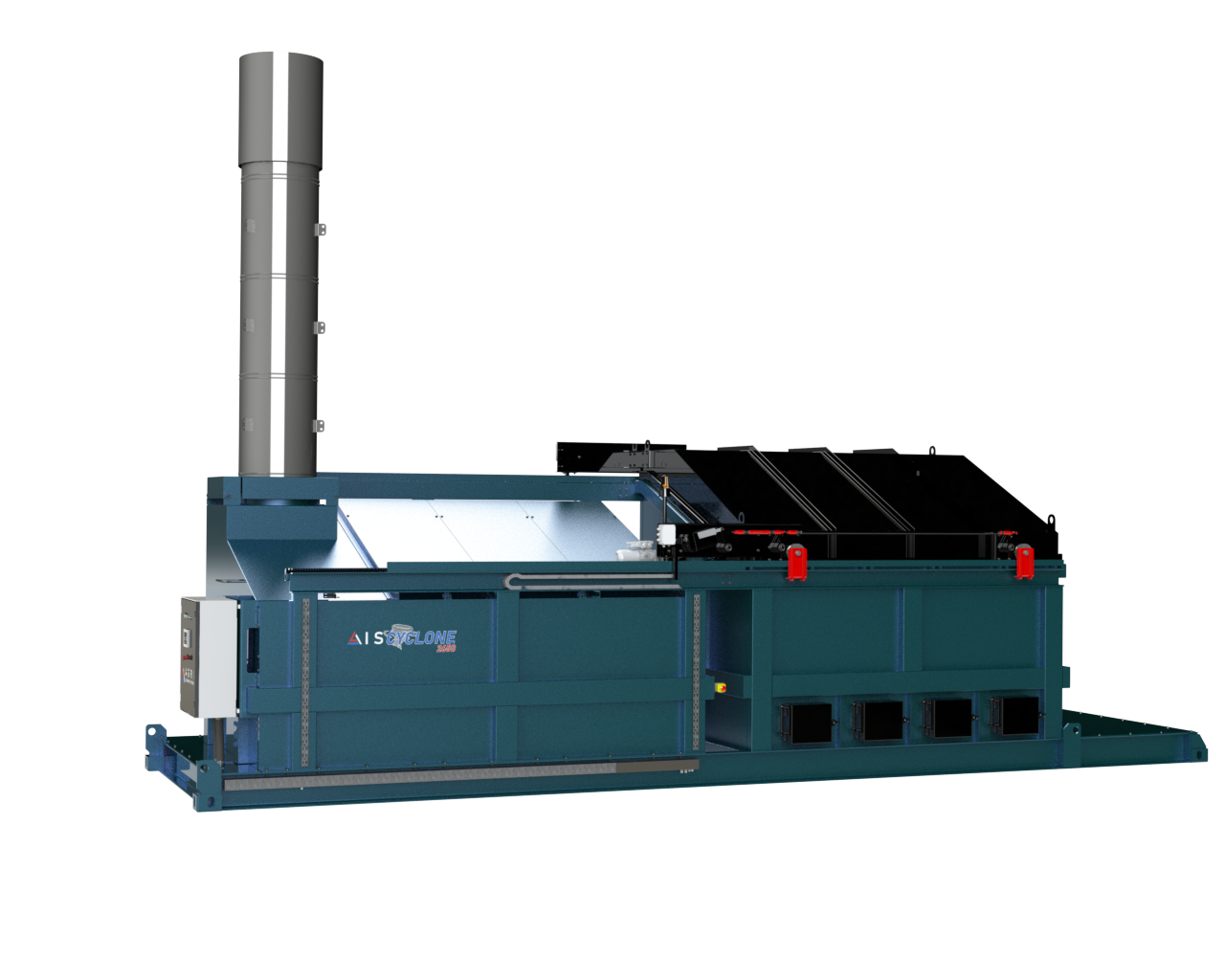
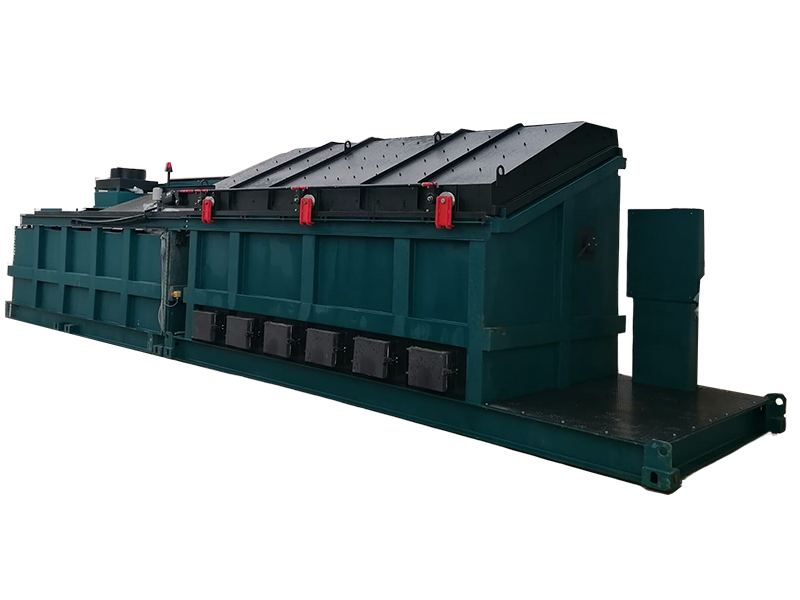
Discuss normal production, peak shifts and interruptions with AIS before settling on a frame size. The AIS 1870, 2650 and 3860 provide larger-capacity comparison points. A published maximum should not be treated as a guaranteed daily output for every feedstock or as permission to exceed the machine's operating limits.
Integrate loading, fuel and site access
At higher volumes, handling can become a bottleneck even when combustion capacity is sufficient. Confirm the container or carcass dimensions, lifting arrangements and operator position. AIS offers integrated hydraulic loading on the 1250, 1870, 2650 and 3860, with the loader's detailed specification agreed for each project.
Review the base, delivery route, fuel supply, chimney location and access for engineers as one installation plan. Where heat recovery is being considered, discuss the available heat demand and connection requirements before purchase. An optional system needs a suitable application; it should not be assumed to deliver a particular saving without a site-specific assessment.
Define the permitted material and support arrangements
Commercial incineration here refers to animal and agricultural waste applications. It is not a blanket statement that any industrial, chemical or hazardous waste may be burned. Tell AIS exactly which materials you intend to process, and confirm the applicable permitting and emissions requirements with the authority responsible for the site.
Agree the operator training, service schedule and fault-reporting process before commissioning. Keep operating information accessible to authorised staff and allow time for inspection of burners, controls and refractory. A realistic contingency for equipment downtime is part of a dependable disposal operation, especially when waste arrives continuously from a production line.
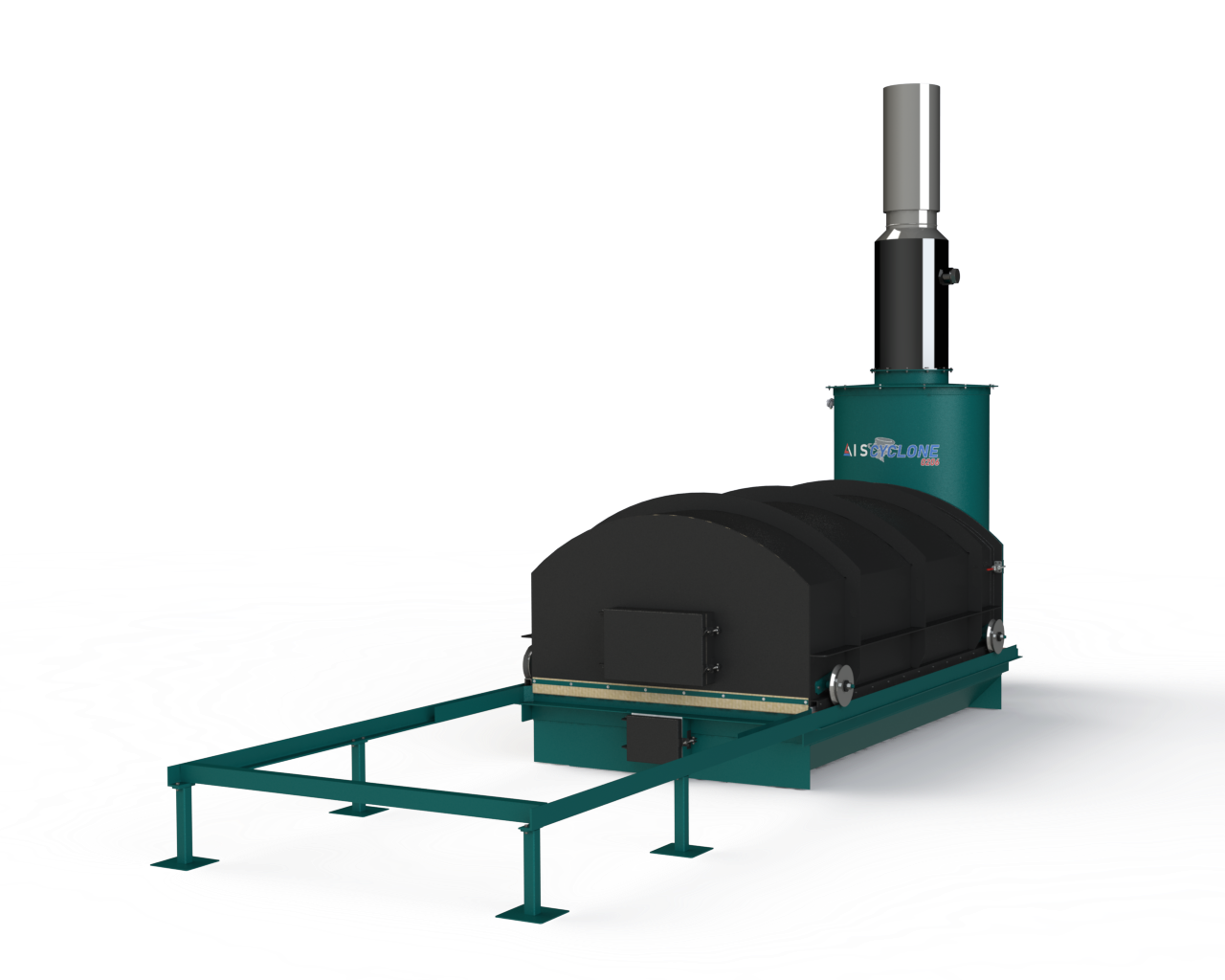
Recommended AIS Cyclone models
Related pages
- Cattle incinerators
- Animal waste incinerators
- Agricultural incinerators
- Poultry incinerators
- Swine incinerators
- Equine incinerators
- Carcass incinerators
- Automatic loading incinerators
- Sheep & lamb incinerators
- Slaughterhouse incinerators
- Pet incinerators
- Incinerator servicing
- DEFRA servicing
- Spares & repairs
- Thermocouple replacement
- Spare parts catalog
- Customer case studies
Frequently asked questions
What is the largest AIS commercial incinerator?+
The AIS 3860 Cyclone is the flagship — 3,750 kg per load and a burn rate up to 950 kg/hr, sized for agribusiness and national disease-control contracts.
Can commercial Cyclones run continuously?+
Yes. Industrial frames (1870, 2650, 3860) are engineered for continuous-duty operation with reinforced refractory and industrial PLC packages.